The Verdict
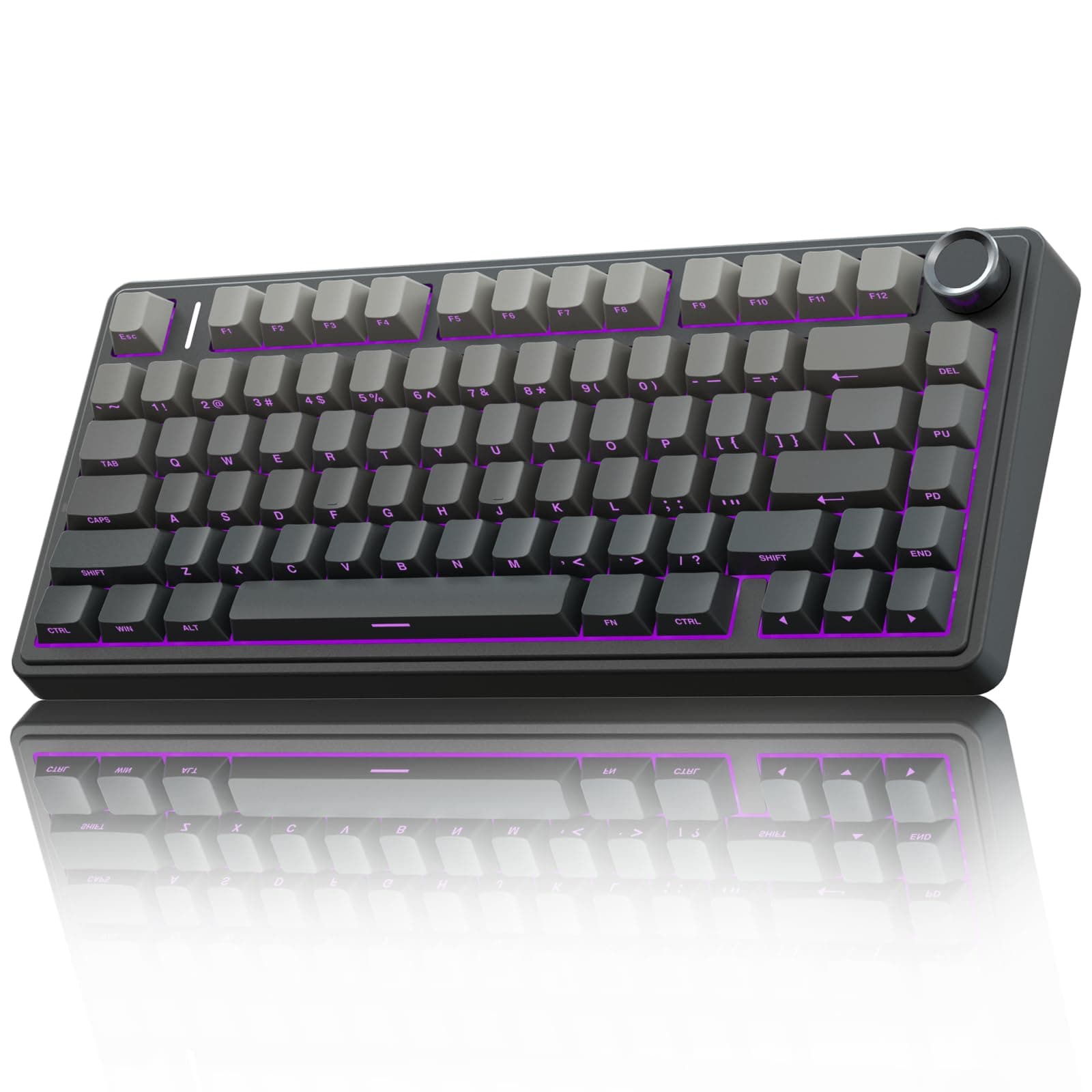
The AULA F75 Pro is a rare case where the viral hype is largely justified. It delivers a shockingly premium, pre-modded typing experience—complete with a satisfying 'thocky' sound profile—at a price that aggressively undercuts the competition. While its software is basic and quality control can be a gamble, the out-of-the-box performance and feature set make it an exceptional value for anyone looking to enter the mechanical keyboard hobby without breaking the bank.
What Went Viral
The AULA F75 Pro exploded on TikTok by positioning itself as a 'Wooting killer' for the masses. Videos with millions of views showcase its deeply satisfying, creamy typing sounds—a key driver in the keyboard ASMR niche. Creators highlight its enthusiast-grade features, like pre-lubed hot-swappable switches, tri-mode connectivity (2.4GHz, Bluetooth, USB-C), and a functional aluminum knob, all packaged in a compact 75% layout for around $65. This combination of premium acoustics, high-end features, and an entry-level price created a perfect storm, presenting the F75 Pro as an accessible entry into a once-expensive hobby.
What the Comments Actually Say
Across platforms, the user consensus is overwhelmingly positive, cementing the F75 Pro's status as a 'budget king.' Reddit users on subreddits like r/BudgetKeebs consistently praise its value, with many noting the build quality feels robust despite its plastic construction. The sound profile is a constant point of acclaim, frequently described as 'thocky' and 'creamy' right out of the box, thanks to factory-lubed switches and internal foam dampening.
A common sentiment on Reddit is that the F75 Pro's out-of-the-box sound and feel 'blows away' more expensive aluminum boards that would require significant modding to achieve a similar result.
However, the praise is not without caveats. YouTube reviews and Reddit threads consistently point to the software as a major weak point. Reviewers describe it as sluggish, basic, and lacking key customization options like remapping the knob's function. Mac users, in particular, are often warned to 'stay away' due to issues with function keys and the lack of a right command key.
More concerning are the scattered but notable reports of quality control issues. One prominent YouTube reviewer experienced 'double letters, spacebar issues, and an abundance of other misfiring issues' almost immediately, while others have noted loose volume knobs. These reports suggest that while most units are excellent, there's a small but real chance of receiving a faulty product.
Technical Comparison
Compared to a standard off-the-shelf mechanical keyboard from a major gaming brand in the sub-$100 category, the AULA F75 Pro is in a different league. Most mainstream competitors at this price point feature soldered switches (not hot-swappable), basic ABS keycaps, and a hollow, plastic-sounding typing experience. They typically lack the multi-layered silicone and foam dampening that gives the F75 Pro its signature quiet and deep sound profile.
The inclusion of factory-lubed switches, well-tuned stabilizers, and tri-mode wireless connectivity are features typically reserved for keyboards costing twice as much. The F75 Pro effectively democratizes the 'custom keyboard' experience, offering a pre-built solution that sounds and feels like it has already been modified by an enthusiast.
The Catch
The primary trade-off for the AULA F75 Pro's incredible price-to-performance ratio is consistency and software polish. The biggest gamble is quality control. While the 4.6-star Amazon rating suggests most users have a flawless experience, a non-trivial number of buyers report hardware flaws like key chatter (double-typing) or malfunctioning stabilizers. This is the risk of opting for a budget-focused brand over an established player with more rigorous testing.
The second catch is the software. It's functional for basic RGB control and macros, but it's clunky and lacks the advanced features and stability of software from brands like Corsair or Logitech. For power users who rely on complex macros or key remapping, the software experience will feel like a significant step down.